Our Blog
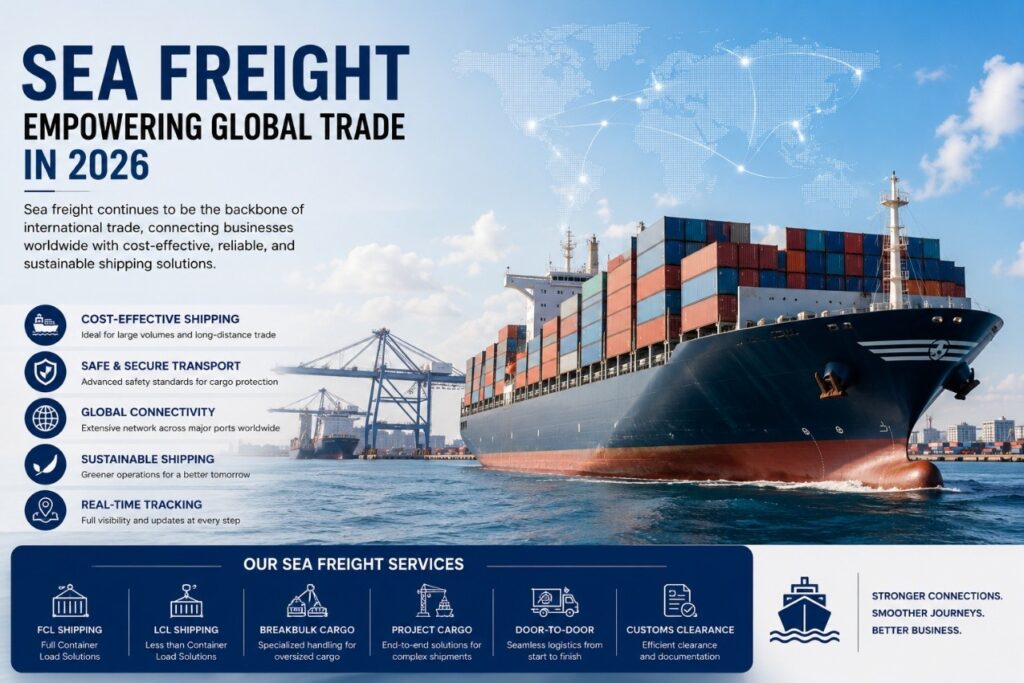
Sea freight continues to be the backbone of international trade in 2026, supporting the movement of goods across continents with cost-effective and reliable shipping solutions. As global commerce expands and supply chains become more interconnected, businesses are increasingly depending on efficient maritime logistics to transport cargo safely and economically.
From container shipping and port digitalisation to sustainability initiatives and supply chain resilience, the sea freight industry is undergoing major transformations that are shaping the future of global logistics.
The Importance of Sea Freight in International Logistics
Sea freight handles a significant percentage of global trade, making it one of the most essential transportation methods for businesses worldwide. It is widely used for transporting bulk cargo, heavy machinery, industrial equipment, raw materials, consumer goods, and large-volume shipments.
Compared to other shipping methods, sea freight offers several advantages:
- Cost-effective transportation for large shipments
- Ability to handle oversized and heavy cargo
- Extensive global trade routes
- Reliable long-distance logistics solutions
- Flexible container shipping options
As businesses continue expanding into international markets, sea freight remains a critical component of global supply chain management.
Digital Transformation in Sea Freight Operations
The shipping industry is rapidly embracing digital technologies to improve operational efficiency and cargo visibility. Modern sea freight operations now rely heavily on automation, smart tracking systems, and digital documentation to streamline logistics processes.
Shipping companies and freight forwarders are implementing advanced technologies such as:
- Real-time cargo tracking
- Electronic bills of lading
- AI-powered logistics planning
- Smart port management systems
- Automated customs documentation
These innovations help reduce delays, improve communication, and enhance overall supply chain transparency.
Growing Demand for Container Shipping
Global demand for containerised shipping continues to rise due to the expansion of e-commerce and international manufacturing networks. Businesses require dependable transportation solutions capable of handling increasing cargo volumes while maintaining delivery schedules.
Container shipping offers flexibility for different types of cargo, including:
Full Container Load (FCL)
FCL shipping is ideal for businesses transporting large cargo volumes. It provides greater security, faster transit times, and reduced cargo handling risks.
Less than Container Load (LCL)
LCL shipping allows multiple businesses to share container space, making it a cost-effective option for smaller shipments.
These flexible solutions help businesses optimize shipping costs while ensuring efficient cargo transportation across international markets.
Sustainability is Reshaping the Maritime Industry
Environmental sustainability has become a major priority in global shipping. The maritime industry is actively working to reduce carbon emissions and improve energy efficiency through greener operational practices.
Key sustainability initiatives in sea freight include:
- Adoption of low-emission fuels
- Energy-efficient vessel technologies
- Route optimisation systems
- Sustainable port operations
- Carbon reduction strategies
Shipping companies investing in environmentally responsible logistics solutions are expected to play a leading role in the future of international trade.
Port Infrastructure and Global Connectivity
Modern ports are becoming smarter and more technologically advanced to handle growing cargo volumes and improve operational efficiency. Governments and logistics providers worldwide are investing heavily in port infrastructure development and trade corridor expansion.
Advanced port systems now support:
- Faster cargo handling
- Automated container management
- Improved customs clearance
- Enhanced security monitoring
- Better multimodal transport integration
Strong port connectivity is essential for maintaining smooth global trade operations and minimizing shipping disruptions.
Managing Supply Chain Challenges
The global logistics industry continues to face challenges related to supply chain disruptions, fluctuating freight rates, geopolitical uncertainties, and port congestion. Businesses are increasingly seeking reliable logistics partners capable of adapting to changing market conditions.
Experienced freight forwarding companies help businesses overcome these challenges through:
- Strategic shipping planning
- Flexible transportation solutions
- Cargo risk management
- Customs clearance support
- End-to-end logistics coordination
A well-managed sea freight strategy helps businesses maintain supply chain stability and improve operational efficiency.
The Role of Sea Freight in Global Commerce
Sea freight plays a crucial role in supporting industries such as manufacturing, construction, automotive, retail, oil and gas, and industrial trading. It enables businesses to transport goods across international markets while controlling logistics costs.
As global trade continues to evolve, businesses are prioritizing shipping partners that offer reliability, flexibility, and efficient cargo handling services.
For companies seeking dependable international logistics support, SQ Shipping provides professional sea freight and global cargo solutions tailored to modern supply chain requirements.
Why Businesses Choose Sea Freight Services
Businesses continue to prefer sea freight because it offers:
- Economical transportation for bulk cargo
- Global trade accessibility
- Secure container shipping
- Efficient multimodal connectivity
- Scalability for growing businesses
Whether transporting industrial goods, commercial products, or oversized equipment, sea freight remains one of the most practical and reliable logistics solutions available.
Conclusion
The sea freight industry is evolving rapidly through digital transformation, sustainability initiatives, and infrastructure advancements. As international trade volumes continue to grow, businesses need efficient and adaptable logistics solutions to remain competitive in global markets.
Sea freight will continue to play a vital role in connecting businesses worldwide, enabling cost-effective cargo transportation, and supporting the future growth of international commerce.
For businesses moving goods internationally, choosing the right shipping method can have a direct impact on costs, delivery schedules, and supply chain efficiency. Sea Freight Services UAE offer a practical solution for companies that need to transport large or heavy shipments while keeping logistics expenses under control. From raw materials and machinery to commercial products and full container loads, ocean freight supports a wide range of business requirements.
The UAE's strategic location, modern ports, and strong connections to global trade routes make sea freight an important part of international logistics. Whether you are importing goods into the UAE or exporting products to international markets, a reliable freight partner can simplify the shipping process, improve visibility, and reduce unnecessary delays. For businesses planning their logistics strategy, understanding how sea freight works and where it provides the greatest value is essential.
Why Choose Sea Freight Services UAE?
One of the biggest advantages of sea freight is its ability to handle high-volume shipments at a competitive cost. Compared with air freight, ocean transportation generally provides a more economical option when shipment size and weight are significant.
- Cost-Effective for Large Shipments
Sea freight is particularly suitable for businesses transporting bulk quantities, heavy equipment, industrial materials, furniture, vehicles, and commercial inventory. Instead of paying premium rates for speed, businesses can use containerized shipping to move larger volumes more efficiently.
Companies can also select between Full Container Load (FCL) and Less than Container Load (LCL) depending on their shipment size. FCL allows one business to use an entire container, while LCL enables smaller shipments to share container space with other cargo.
- Suitable for Different Types of Cargo
Sea freight can accommodate a broad range of commercial shipments. Depending on applicable regulations and carrier requirements, businesses can transport general cargo, machinery, manufactured products, raw materials, and other goods through established ocean freight networks.
This flexibility makes sea transportation useful for manufacturers, wholesalers, retailers, importers, exporters, and distributors that regularly move inventory across international markets.
- Supports International Supply Chains
The UAE serves as a major logistics and trading hub connecting businesses across the Middle East, Asia, Europe, Africa, and other global markets. Efficient sea freight can therefore help businesses establish dependable import and export routes.
A professional freight forwarder can coordinate important stages of transportation, including cargo collection, documentation, port handling, customs procedures, container movement, and final delivery. This integrated approach reduces the administrative burden on businesses and allows them to focus on their core operations.

How Does Sea Freight Shipping Work?
Understanding the shipping process can help businesses prepare documentation, manage schedules, and avoid preventable delays.
Step 1: Shipment Planning
The process begins by identifying the cargo type, dimensions, weight, origin, destination, and required delivery schedule. The appropriate FCL or LCL solution can then be selected.
Step 2: Documentation and Booking
The freight forwarder arranges the shipment booking and helps prepare the required commercial and shipping documents. Accurate paperwork is essential for smooth cargo movement and customs processing.
Step 3: Cargo Collection and Port Handling
Goods are collected from the supplier or designated location and transported to the relevant port. Cargo is then handled and loaded according to the shipping schedule.
Step 4: Ocean Transportation
The container or consolidated cargo is transported by vessel to the destination port. Transit time varies according to the shipping route, carrier schedule, port conditions, and other operational factors.
Step 5: Customs Clearance and Delivery
Once the shipment reaches its destination, customs procedures are completed before the cargo is released for onward transportation. Final delivery can then be arranged to the required warehouse, facility, or business location.
Once the shipment reaches its destination, customs clearance services can help businesses complete the required customs procedures before the cargo is released for onward transportation.
Who Can Benefit From Sea Freight?
Sea freight is particularly valuable for businesses that prioritize transportation efficiency and cost control rather than the shortest possible transit time.
Manufacturers can use ocean freight to move raw materials, components, and finished products in larger quantities.
Retailers and wholesalers can transport inventory in bulk to support regular stock replenishment without relying exclusively on more expensive transportation methods.
Importers and exporters can establish recurring international shipping routes and manage commercial cargo between major global markets.
Industrial and construction companies can benefit from sea freight when moving heavy machinery, equipment, materials, and project cargo that may be impractical or expensive to transport by air.
For businesses with regular shipping requirements, working with an experienced logistics provider can also improve planning and coordination across different stages of the supply chain.
Improving Sea Freight Efficiency in the UAE
Cost savings do not depend only on freight rates. Businesses can improve overall logistics efficiency by planning shipments early, selecting the right container option, preparing accurate documentation, consolidating compatible cargo where appropriate, and coordinating customs requirements in advance.
Clear communication with a freight forwarder is equally important. Businesses should provide accurate cargo details and communicate delivery priorities early so that suitable routing and handling arrangements can be considered.
For shipments entering the UAE, efficient customs coordination can also help minimize avoidable interruptions. Integrating freight transportation with warehousing and distribution can further improve inventory flow from port to final destination. Integrating freight transportation with warehousing and distribution services can further improve inventory flow from port to final destination.
Conclusion
For businesses seeking a practical way to move large or heavy shipments internationally, Sea Freight Services UAE provides an effective balance between capacity, flexibility, and transportation cost. With the right freight partner, businesses can simplify booking, documentation, cargo handling, customs coordination, and final delivery while maintaining better control over their supply chain.
Sea freight may not always be the fastest transportation method, but it can be highly efficient for planned commercial shipments where cost and volume matter. If you are looking to improve your international shipping strategy, contact Sea Quest Shipping to discuss your cargo requirements and find a suitable sea freight solution.
If you are planning your next shipment, get a shipping quote based on your cargo type, volume, origin, destination, and delivery requirements.
Latest Blogs