Our Blog
The Future of Sea Freight and International Shipping
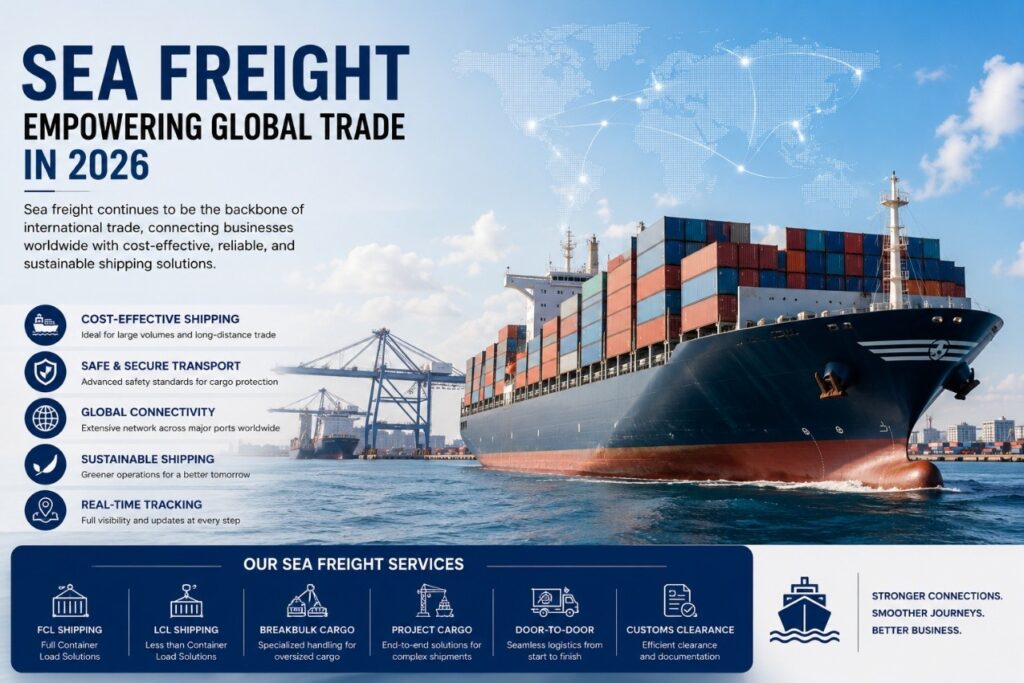
Sea freight continues to be the backbone of international trade in 2026, supporting the movement of goods across continents with cost-effective and reliable shipping solutions. As global commerce expands and supply chains become more interconnected, businesses are increasingly depending on efficient maritime logistics to transport cargo safely and economically.
From container shipping and port digitalisation to sustainability initiatives and supply chain resilience, the sea freight industry is undergoing major transformations that are shaping the future of global logistics.
The Importance of Sea Freight in International Logistics
Sea freight handles a significant percentage of global trade, making it one of the most essential transportation methods for businesses worldwide. It is widely used for transporting bulk cargo, heavy machinery, industrial equipment, raw materials, consumer goods, and large-volume shipments.
Compared to other shipping methods, sea freight offers several advantages:
- Cost-effective transportation for large shipments
- Ability to handle oversized and heavy cargo
- Extensive global trade routes
- Reliable long-distance logistics solutions
- Flexible container shipping options
As businesses continue expanding into international markets, sea freight remains a critical component of global supply chain management.
Digital Transformation in Sea Freight Operations
The shipping industry is rapidly embracing digital technologies to improve operational efficiency and cargo visibility. Modern sea freight operations now rely heavily on automation, smart tracking systems, and digital documentation to streamline logistics processes.
Shipping companies and freight forwarders are implementing advanced technologies such as:
- Real-time cargo tracking
- Electronic bills of lading
- AI-powered logistics planning
- Smart port management systems
- Automated customs documentation
These innovations help reduce delays, improve communication, and enhance overall supply chain transparency.
Growing Demand for Container Shipping
Global demand for containerised shipping continues to rise due to the expansion of e-commerce and international manufacturing networks. Businesses require dependable transportation solutions capable of handling increasing cargo volumes while maintaining delivery schedules.
Container shipping offers flexibility for different types of cargo, including:
Full Container Load (FCL)
FCL shipping is ideal for businesses transporting large cargo volumes. It provides greater security, faster transit times, and reduced cargo handling risks.
Less than Container Load (LCL)
LCL shipping allows multiple businesses to share container space, making it a cost-effective option for smaller shipments.
These flexible solutions help businesses optimize shipping costs while ensuring efficient cargo transportation across international markets.>
Sustainability is Reshaping the Maritime Industry
Environmental sustainability has become a major priority in global shipping. The maritime industry is actively working to reduce carbon emissions and improve energy efficiency through greener operational practices.
Key sustainability initiatives in sea freight include:
- Adoption of low-emission fuels
- Energy-efficient vessel technologies
- Route optimisation systems
- Sustainable port operations
- Carbon reduction strategies
Shipping companies investing in environmentally responsible logistics solutions are expected to play a leading role in the future of international trade.
Port Infrastructure and Global Connectivity
Modern ports are becoming smarter and more technologically advanced to handle growing cargo volumes and improve operational efficiency. Governments and logistics providers worldwide are investing heavily in port infrastructure development and trade corridor expansion.
Advanced port systems now support:
- Faster cargo handling
- Automated container management
- Improved customs clearance
- Enhanced security monitoring
- Better multimodal transport integration
Strong port connectivity is essential for maintaining smooth global trade operations and minimizing shipping disruptions.
Managing Supply Chain Challenges
The global logistics industry continues to face challenges related to supply chain disruptions, fluctuating freight rates, geopolitical uncertainties, and port congestion. Businesses are increasingly seeking reliable logistics partners capable of adapting to changing market conditions.
Experienced freight forwarding companies help businesses overcome these challenges through:
- Strategic shipping planning
- Flexible transportation solutions
- Cargo risk management
- Customs clearance support
- End-to-end logistics coordination
A well-managed sea freight strategy helps businesses maintain supply chain stability and improve operational efficiency.
The Role of Sea Freight in Global Commerce
Sea freight plays a crucial role in supporting industries such as manufacturing, construction, automotive, retail, oil and gas, and industrial trading. It enables businesses to transport goods across international markets while controlling logistics costs.
As global trade continues to evolve, businesses are prioritizing shipping partners that offer reliability, flexibility, and efficient cargo handling services.
For companies seeking dependable international logistics support, SQ Shipping provides professional sea freight and global cargo solutions tailored to modern supply chain requirements.
Why Businesses Choose Sea Freight Services
Businesses continue to prefer sea freight because it offers:
- Economical transportation for bulk cargo
- Global trade accessibility
- Secure container shipping
- Efficient multimodal connectivity
- Scalability for growing businesses
Whether transporting industrial goods, commercial products, or oversized equipment, sea freight remains one of the most practical and reliable logistics solutions available.
Conclusion
The sea freight industry is evolving rapidly through digital transformation, sustainability initiatives, and infrastructure advancements. As international trade volumes continue to grow, businesses need efficient and adaptable logistics solutions to remain competitive in global markets.
Sea freight will continue to play a vital role in connecting businesses worldwide, enabling cost-effective cargo transportation, and supporting the future growth of international commerce.
Latest Blogs