Our Blog
Air Freight Services in UAE: The Complete 2026 Guide
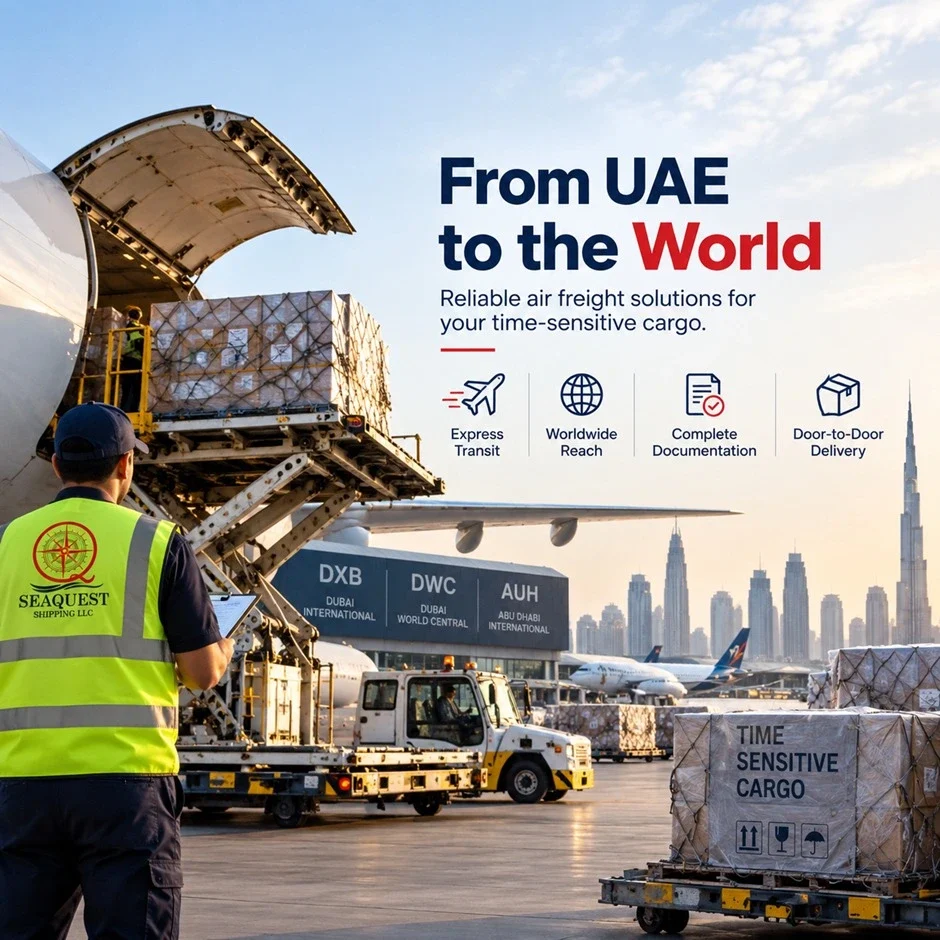
If your cargo needs to be somewhere fast, air freight in the UAE is how it gets there. It's the movement of goods by aircraft through UAE gateways like Dubai International Airport (DXB), Dubai World Central (DWC), and Abu Dhabi International, coordinated by a freight forwarder who books the cargo space, prepares the paperwork, and clears customs on both ends. For businesses moving pharmaceuticals, electronics, perishables, or anything with a deadline attached, air is usually the mode that saves the shipment.
So What Actually Counts as "Air Freight Services" in the UAE?
It's not just the flight. That's the part people picture, but the actual service covers everything around it: booking space with an airline, consolidating smaller shipments, sorting out documentation, arranging insurance, and getting the cargo to its final address once it lands.
Dubai's numbers back up why this matters at scale. In 2025, the emirate moved 2.15 million metric tonnes of air cargo, according to figures from Airports Council International World, reported via Khaleej Times, enough to keep DXB ranked among the busiest cargo airports on the planet, even with a small year-on-year dip. That volume exists because Dubai sits at a genuinely useful crossroads between Asia, Europe, and Africa, and businesses lean on that geography constantly.
An air freight provider handling this end-to-end means you're not chasing separate vendors for booking, paperwork, and delivery. One point of contact, one shipment tracked start to finish.
What Happens Between Booking and Delivery?
Here's the honest version of the process, stripped of jargon:
You (or your forwarder) book space with an airline. The forwarder prepares the Air Waybill — think of it as the shipment's passport — along with any other paperwork the route requires. The cargo goes through export screening, gets loaded, flies, clears customs at the other end, and finally reaches the recipient, often door to door if that's what you've arranged.
What makes Dubai specifically fast isn't the airport building; it's the map. DXB can reach roughly two-thirds of the world's population within an eight-hour flight. That's a real operational edge, not marketing language, and it's part of why the hub has stayed resilient even when global air cargo demand wobbles.
Roughly, the stages look like this:
- Booking and Air Waybill prep
- Export clearance and security checks
- Loading onto the flight
- Import clearance at destination
- Final delivery
Nothing exotic — but skip a step, or get the paperwork wrong, and the whole timeline slips.
What Does It Actually Cost?
Air freight pricing comes down to "chargeable weight", whichever is higher between what your shipment actually weighs and what it weighs based on its dimensions (volumetric weight). Airlines bill on the bigger number, not the one you'd prefer.
On top of the base rate, expect fuel surcharges, security fees, and whatever handling charges apply at the destination. And pricing isn't static — global air cargo volume crossed 131 million metric tonnes in 2025, up 3.3% from the year before, largely on the back of e-commerce demand. When demand climbs on popular routes, so do rates.
Because of all that variability, nobody serious quotes air freight off a flat rate card. It's route-specific, cargo-specific, and season-specific, which is why getting an actual quote beats guessing from a price list.
Air, Sea, or Sea-Air — Which One Fits Your Shipment?
This really comes down to one question: how much is speed worth to you?
| Factor | Air Freight | Sea Freight | Sea-Air Freight |
|---|---|---|---|
| Transit time | 1–5 days | 20–45 days | 10–20 days |
| Cost per kg | Highest | Lowest | Somewhere in between |
| Works best for | Urgent, high-value, perishable goods | Bulk cargo with no rush | Moderate urgency, tighter budget |
| Paperwork load | Moderate | Heavier, especially FCL/LCL | Moderate |
| UAE hubs involved | DXB, DWC, Abu Dhabi Airport | Jebel Ali Port, Khalifa Port | Jebel Ali → regional air hub |
If neither extreme fits — you don't want to pay full air rates, but 45 days by sea is too slow — sea-air freight is the compromise. Cargo travels by sea to a regional transshipment point, then switches to air for the final stretch. You lose some speed, but you keep a lot of the cost savings.
Which Documents Actually Matter for UAE Air Exports?
The Air Waybill is non-negotiable — it's both your receipt and your contract with the airline. Everything else supports it.
Depending on the shipment, you'll also likely need:
- A commercial invoice and packing list
- A certificate of origin (some destinations require it, some don't)
- Export declaration paperwork
- A dangerous goods declaration, if that applies
- Insurance documentation for anything high-value
Most shipment delays trace back to paperwork, not the flight itself. That's the part where proper customs clearance support earns its keep; it keeps cargo from sitting stuck at either end because a form was missing or filled out wrong.
How Do You Actually Pick a Provider?
Four things matter more than the rest: how strong their airline relationships are, how sharp their customs knowledge is, how transparent their tracking is, and whether they've actually handled cargo like yours before.
If your shipment is unusual — HAZMAT, oversized, temperature-sensitive — ask directly whether they've done it, not just whether they say they can.
Things worth checking before you commit:
- Real airline partnerships, not just claims of them
- Certified customs brokers who know UAE FTA rules cold
- Tracking you can actually see, plus a person you can call
- Pricing with no surprise line items later
- Support that's there when your shipment needs it, not just during business hours
Frequently Asked Questions
How long does air freight from the UAE to Europe or Asia take?
Usually 1–3 days from major hubs like DXB, depending on the route and how quickly customs moves at the other end.
Is air freight really that much pricier than sea freight?
Per kilogram, yes. But the time saved often makes up for it when the cargo is urgent or high-value.
Can the same company handle both my air and sea shipments?
Many UAE forwarders do — air, sea, sea-air, land, warehousing, and customs clearance under one roof, which saves you from juggling multiple vendors.
What kind of cargo makes sense for air freight?
Perishables, pharmaceuticals, electronics, and anything on a tight deadline- the cargo where a few days matter.
How is the final price worked out?
Chargeable weight (whichever is higher, actual or volumetric) plus surcharges and destination fees. No single flat number applies across shipments.
Ready to Move Your Cargo? Here's Your Next Step
Air freight in the UAE ( External Link) isn't complicated once you know the moving parts. Book smart, get the paperwork right, and pick a hub that actually gets you where you're going fast; most of what goes wrong with a shipment traces back to one of those three things being rushed or skipped.
Whether you land on pure air freight or a sea-air combination really depends on how urgent the cargo is versus how much you're willing to pay to make that urgency go away. Neither option is "better" in the abstract; it's a trade-off between speed and cost that shifts with every shipment.
At the end of the day, the difference between a smooth delivery and a stuck one usually comes down to who's handling it, how well they know the route, how quickly they catch a documentation issue before it becomes a delay, and how much they've actually done this before versus just saying they can.
Latest Blogs